One Pound, One Prize, One Very Happy Winner: The Secret Life of Pyle's Tombola Table
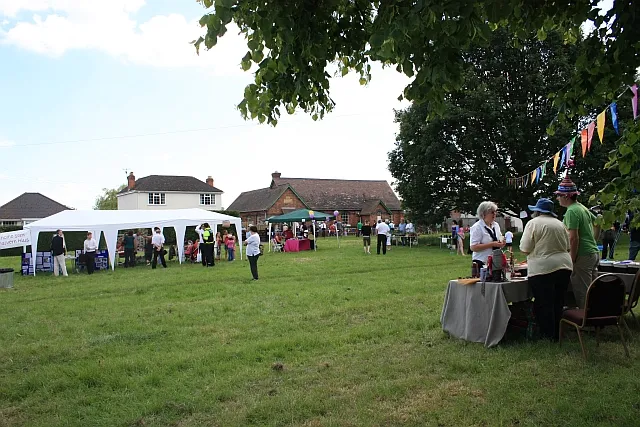
Photo: Bob Embleton, CC BY-SA 2.0, via Wikimedia Commons
There's a moment at every Pyle village event when the crowd thins, the tea goes cold, and someone wanders over to the tombola table with a pound coin burning a hole in their pocket. They think they're just having a flutter. What they're actually doing is taking part in one of the village's oldest and least discussed institutions.
We spent a recent Saturday following a single prize — a boxed jigsaw of a canal boat, if you must know — from the moment it arrived in a carrier bag of donations to the moment it left the table under somebody's arm, grinning like they'd won the lottery. In between, we learned rather a lot about the village itself.
The Table That Runs Itself
The tombola doesn't advertise. It doesn't need to. It occupies the same patch of grass at every summer fête and Christmas market, wedged between the cake stall and the bric-a-brac, run by the same small committee of volunteers who've been doing it since roughly the time decimal currency was still settling in.
"People ask if we get tired of it," says Margaret, who's been calling the numbers since the late eighties. "I tell them the prizes get tired of us first. We've had the same nutcracker set come back three Christmases running."
That's the thing about a village tombola: nothing is truly new, and nothing is truly lost. Prizes circulate like gossip. The candle you win in July may well be the candle your neighbour regifts in October, only for it to land back on the table by spring. Regulars call this "doing the rounds," and nobody minds. It's part of the charm.
Anatomy of a Prize
Our jigsaw began its journey, as most do, in a donation bag dropped off at the village hall on a Wednesday morning. The sorting crew — a formidable pair who prefer to remain nameless — gave it the once-over. Rules of thumb: nothing broken, nothing expired, nothing that could be described as "a bit personal."
The jigsaw passed. It was priced at £1-a-ticket tier, wrapped loosely in a bit of ribbon, and laid out on the trestle table alongside the mystery envelopes and the infamous "star prize" that nobody ever quite wins.
By half two, a young dad pushed a coin across the table, drew ticket 47, and let out a shout that turned half the field around. The jigsaw went home with him. His daughter, we're told, completed it twice that weekend.
Tips for First-Time Tombola Hopefuls
If you're new to the village — or new to the tombola — a few pointers from the veterans:
- Go early for the good stuff. The best prizes rarely survive past lunchtime.
- But go late for the odds. Volunteers get generous near pack-up time. Ticket for a win is not uncommon once the clock nudges towards four.
- Read the table. Anything labelled "star prize" has usually been a star prize for several years running. Approach with realistic expectations.
- Bring coins. The float is finite, and there's a special kind of despair in watching someone try to pay for three tickets with a contactless card.
- Regift responsibly. Everything comes back eventually. Just wipe the dust off first.
More Than a Pound's Worth
Here's the thing the tombola table actually reveals about Pyle: it's not about the prizes at all. The £1 buys you a ticket, yes, but also a chat with Margaret, a mock-outrage from your neighbour who drew the losing number next to you, and a small, warm sense that the village is quietly looking after itself.
The money raised goes back into the events calendar — the marquee hire, the bunting, the generator that keeps the lights on. So every losing ticket is, in its way, a winning one.
The jigsaw, meanwhile? We hear it's been completed, photographed, and passed on to a cousin in Porthcawl. Expect to see it back on the table by the summer fête. It always comes home.