In Defence of the 6pm Rule: The Lovely Unwritten Laws of a Pyle Village Fête

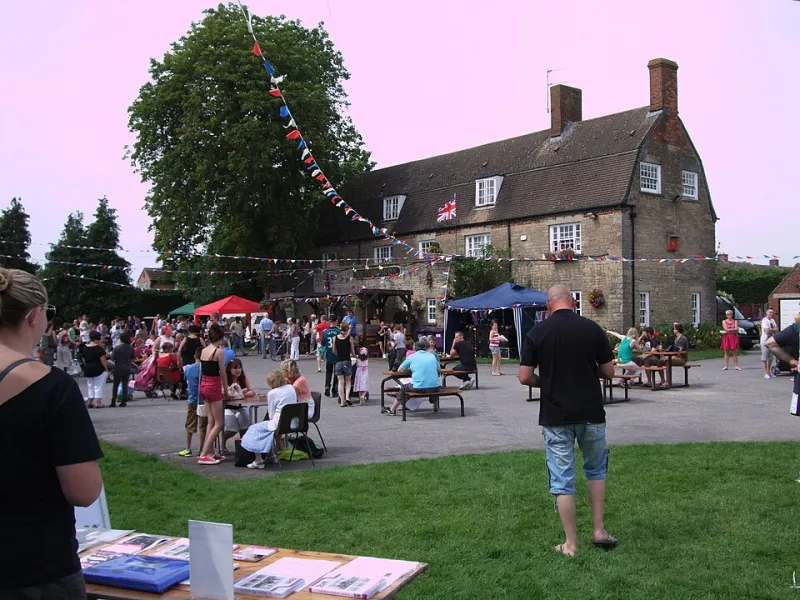
Photo: Basile Morin, CC BY-SA 4.0, via Wikimedia Commons
Nobody hands you a rulebook when you move to Pyle Garden Village. And yet, within two attendances of any community event, you'll have absorbed the laws anyway — by osmosis, mainly, and via a gentle tap on the shoulder from Jean from number 14.
Consider this your field guide. Consider it, too, a defence. Because these odd little customs? They're the whole point.
The 6pm Rule
Let's start with the big one. Whatever time a fête is scheduled to finish, the real end is 6pm. The bunting may still be up, the brass band may still be mid-song, but at six o'clock the stallholders begin the sacred dismantling ritual — not out of rudeness, but because some of them have been on their feet since seven in the morning and the kettle at home is calling.
You'll see newcomers lingering hopefully at the coconut shy at 6:04. Don't pity them. Pity is not what they need. What they need is to be told, kindly, that the coconut shy has been closed since the 6pm Rule came into effect, and that there's always next year.
The Tombola Queue Forms Before the Tombola Exists
The tombola table does not open until the fête is formally opened. Everyone knows this. And yet the queue for it begins forming at roughly the time the first stall is unloaded. By the time the ribbon is cut, the queue has achieved a structure and social hierarchy that some small nations would envy.
Is this sensible? No. Is it going to change? Also no. There is something deeply reassuring about a community that plans its day around the small hope of winning a jar of own-brand chutney.
The Best Chairs Are Reserved, and Nobody Knows by Whom
Toward the back of the main events field, a row of folding chairs will appear at some point in the morning. They belong to no one and everyone. They are for the people who arrived early to set up, the ones who've been baking since Thursday, the quiet heroes of the raffle table.
You may not sit in them. You will know this without being told. If you accidentally sit in one, you will be forgiven — but you'll remember it, and so will everyone else, for approximately eleven years.
The Bake Stall Is a Battlefield
Officially, the bake stall is a charming display of homemade goodness raising money for good causes. Unofficially, it is the most hotly contested event on the village calendar, and the only actual competition taking place.
The judging is conducted entirely through sales figures and meaningful silences. If your Victoria sponge sells out in the first twenty minutes, congratulations — you have won Pyle for the year, and you will be insufferable about it, and rightly so. If your offering remains at closing time, you will wrap it back up and declare that it "obviously wasn't a sponge crowd."
Staying to the End Is the Whole Job
Here's my actual opinion, since you asked: the customs only work if we keep showing up for them. The 6pm Rule works because enough people respect it. The tombola queue is charming because it's a tradition, not a queue for the sake of queuing. The reserved chairs matter because they quietly say that effort is noticed here.
You could strip all of it away. You could run a fête with a strict timetable, anonymous chairs and a bake stall with an actual judging panel. It would be efficient. It would be terrible.
So here's to the unwritten laws of Pyle. Follow them, bend them gently, and above all — be packed up and off the field by ten past six. Jean will be checking.